Takeaways:
- The competitor with five times your budget is almost certainly wasting most of it. That waste is your opening.
- The typical middle-market company throws away 60% of its marketing spend every year, mostly by guessing at what its customers actually want.
- Research that costs $30,000 to $60,000 and lasts about five years is what lets a smaller firm outsmart a rival it can never outspend.
- Only 56% of B2B companies have done even one fundamental research practice in three years. The field is wide open for the ones who do.
There’s a fight you think you’re losing. You look at the competitor with the fat marketing budget, the one outspending you five to one, and you assume the math is simply against you. Bigger wallet, bigger reach, better outcomes. Case closed. Except that isn’t how it actually works, and once you see why, the whole contest looks different.
Here’s the reframe. That big spender is almost certainly pouring most of its budget straight down the drain, because throwing more money at a marketing strategy built on guesswork just means you waste money faster. Spend is not the same as effectiveness. And the single tool that separates the two, the one thing that lets a middle-market company beat a rival it can never outspend, is market research. Enter the 12 Battles™ Framework, the twelve practices I lay out in The B2B Marketing Revolution® to master your marketing game and guarantee your outcomes. This is Battle 3, and I’d argue research is the most powerful equalizer available to you.
Spending More Is Not the Same as Winning
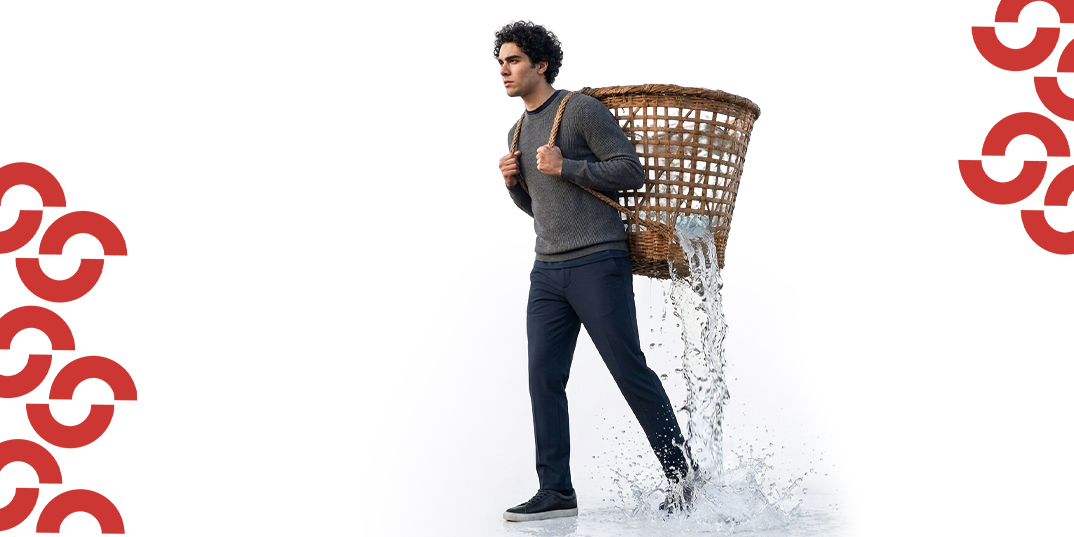
I champion market research as a do-or-die investment, and it’s the third of the twelve mindset shifts I lay out for leaders who want marketing that actually produces predictable growth. Here’s the number that should stop you cold. Based on two decades of doing this work, I believe most people reading this are wasting a full 60% of their marketing investment every year. On a $100,000 annual budget, that’s $60,000 gone, and $300,000 torched over five years.
Now apply that to your deep-pocketed competitor. If they’re guessing the way most companies guess, their bigger budget just means a bigger pile of wasted cash. Their scale is working against them, not for them. The book puts the stakes plainly:
“For most of you reading this book, you are wasting a full 60 percent of your marketing investment a year. You can’t afford to skip market research. It’s the primary driver of your ability to drive strong, predictable marketing outcomes.”
— The B2B Marketing Revolution®
This is exactly why budget size doesn’t decide the winner. The company that truly understands its customers can direct every dollar with precision, while the company that’s guessing sprays and prays with a larger hose. Precision beats volume, and precision comes from research.
Why the Playing Field Is So Wide Open
This part should genuinely excite you: few companies are doing this well, which means the advantage is sitting there unclaimed. In our research, the highest participation rate in any fundamental market research practice over the previous three years was just 56%. Read that as the ceiling, not the floor. Nearly half of B2B companies haven’t touched even the most basic research protocols.
Why do they skip it? The reasons are almost always about money. In our 2024 RedRover U.S. Middle-Market B2B Marketing Performance Study, 55% said research was “too expensive,” and 45% said they’d rather put those dollars straight into marketing execution. I understand the instinct, and I think it’s backward. It’s too expensive not to do the research. Every dollar you pour into execution without it is a dollar aimed at a target you haven’t actually located.
So when your competitors talk themselves out of research to protect their execution budget, they’re handing you the opening. The knowledge they refuse to buy is knowledge you can own.
What Real Research Looks Like
When I say research, I don’t mean a hunch or a quick poll. I mean a real protocol with two halves that work together, and doing both is what gives you a genuine edge.
The Two Halves That Make It Work
The qualitative half uncovers the beliefs and hidden openings that people hold about your brand and your market. The quantitative half then validates those findings against a statistically valid audience so you’re building on hard numbers instead of anecdotes. A complete protocol generally includes:
- Internal and external stakeholder interviews to surface where your team’s view and your customers’ view diverge.
- Competitive surveillance including a reputation scan, so you know exactly how you stack up.
- Value proposition and offer strategy evaluation to pressure-test what you’re actually promising the market.
- A sales and marketing alignment inventory to expose where your messaging and your delivery drift apart.
- A marketing performance audit and customer transaction analysis to ground everything in what’s really happening.
- Surveys of customers and prospects, including the ones you’ve lost, to validate the whole picture at scale.
What It Costs, and Why That’s the Point
You can outsource this entire protocol for roughly $30,000 to $60,000, and the insights typically hold up for about five years depending on how fast your industry moves. Measured against the $300,000 the average company wastes over that same window, the research nearly pays for itself before you run a single campaign. As the book warns:
“You cannot shortcut market research and have any hope of reliably predicting your outcomes.”
— The B2B Marketing Revolution®
One caution: don’t cherry-pick only the pieces your team has time for. It matters more to complete the research fully than to execute any single piece perfectly.
Proof: How Knowledge Beat a Bigger Budget
Let me show you the equalizer in action. LegacyTech*, a $40M family-owned manufacturer, had run its marketing for years on past performance data and a fair amount of guesswork, having never invested in real research. When its plan started sliding, leadership finally agreed to let us dig in.
What the research surfaced changed everything. The market saw LegacyTech as the old, stodgy player, when the company was actually high-tech and innovative, a perception gap it never knew it had. We found sizable holes in competitors’ PPC (pay-per-click) strategies that were ripe to exploit. We discovered that its engineering buyers strongly preferred visual content, even though roughly 75% of what the company produced was written. And we identified the single differentiator that would set it miles apart. A year into the research-backed strategy, closed sales from inbound leads were up more than 50%, and inbound had grown to make up nearly 95% of the firm’s total lead volume. None of that came from outspending anyone. It came from knowing things the competition didn’t.
The Price of Skipping It
Now the other side of the ledger. Panorama Window and Door*, a $30M manufacturer, needed marketing to drive more consistent leads as sales-team turnover mounted. The CEO knew she needed to interview and survey customers to understand what messaging and positioning would land. But her board had handed her an aspirational growth goal with no data behind it, and only two quarters to hit it, so she skipped the research and jumped straight to execution.
We ran a test-and-pivot approach for her, throwing many dozens of variables against the wall to see what stuck. It worked eventually, but “eventually” is the problem. My team estimated it took almost seven months longer to reach her growth goals than if we’d started with reliable research, and Panorama burned an estimated $75,000 to $100,000 in wasted marketing spend getting there. The research that would have prevented all of it would have cost $30,000 over 75 days. Sometimes it pays to slow down to speed up.
Buy the Knowledge Your Competitors Won’t
You don’t need a bigger budget than your competition. You need to understand your market better than they understand theirs, and that understanding is for sale at a price a middle-market company can absolutely afford. While your rivals protect their execution dollars and keep guessing, you can buy the one thing that makes every dollar you spend hit harder.
So stop trying to win a spending war you were never going to win, and go win the knowledge war instead. That’s the fight the great equalizer was built for.
*Note: Client details have been modified to respect confidentiality.
By Lori Turner-Wilson, RedRover CEO/Founder, Internationally Best-Selling Author of The B2B Marketing Revolution®: A Battle Plan for Guaranteed Outcomes
Taking Action
The above insights are part of hundreds of best practices found in The B2B Marketing Revolution®: A Battle Plan for Guaranteed Outcomes — the playbook that middle-market B2B CEOs and marketing leaders lean on to scale. Backed by a groundbreaking research study, this book offers time-tested best practices, indispensable KPIs for benchmarking, insights on where your dollars are best spent, and, above all, the proven 12 Battles™ Framework for generating guaranteed marketing outcomes. The B2B Marketing Revolution® is a battle-hardened approach to becoming an outcomes-first leader who’s ready to shake up the status quo, invest in high-payoff market research and optimization, and — yes — even torch what’s not serving your endgame. Download more than 50 templates, scripts, and tools from the book on the Battle Reader Hub.
If you’d like to talk about how to build a marketing engine that delivers predictable results — whether you want to build it yourself or tag in our team to lead the way — we’d be delighted to help you get started.